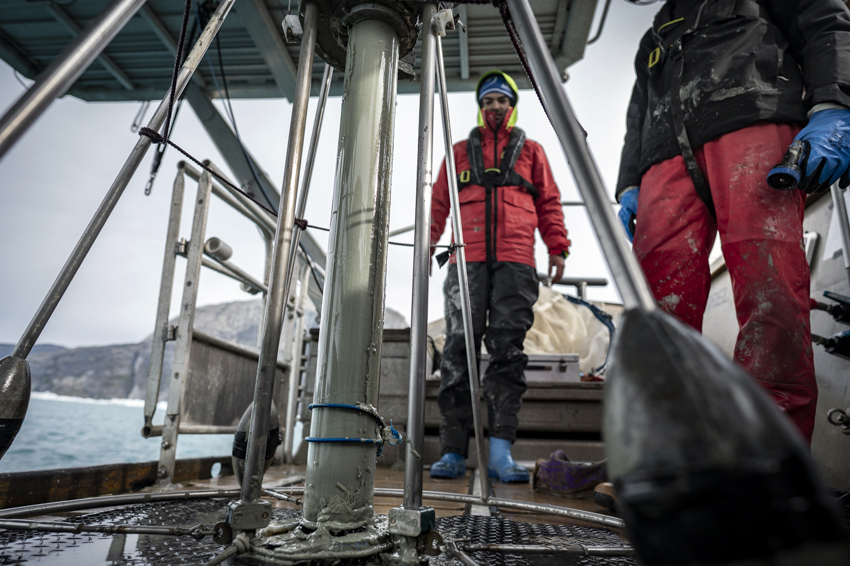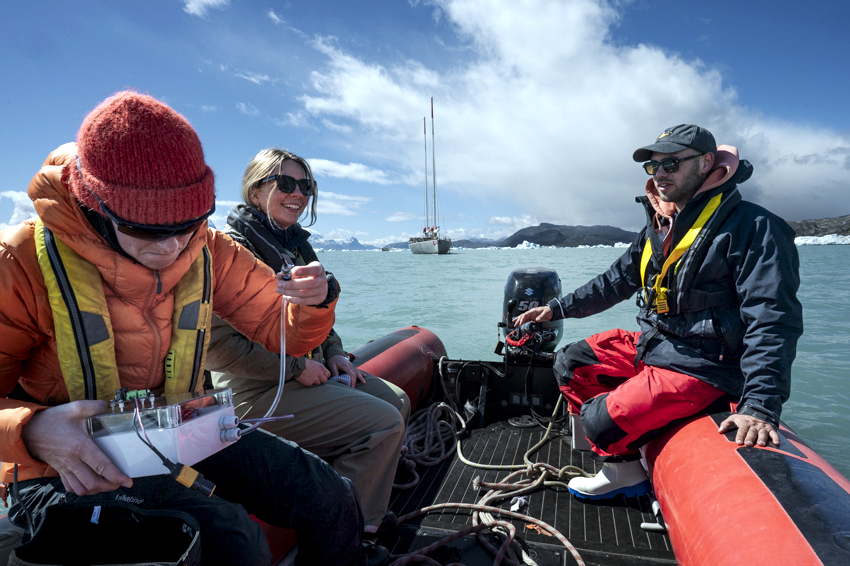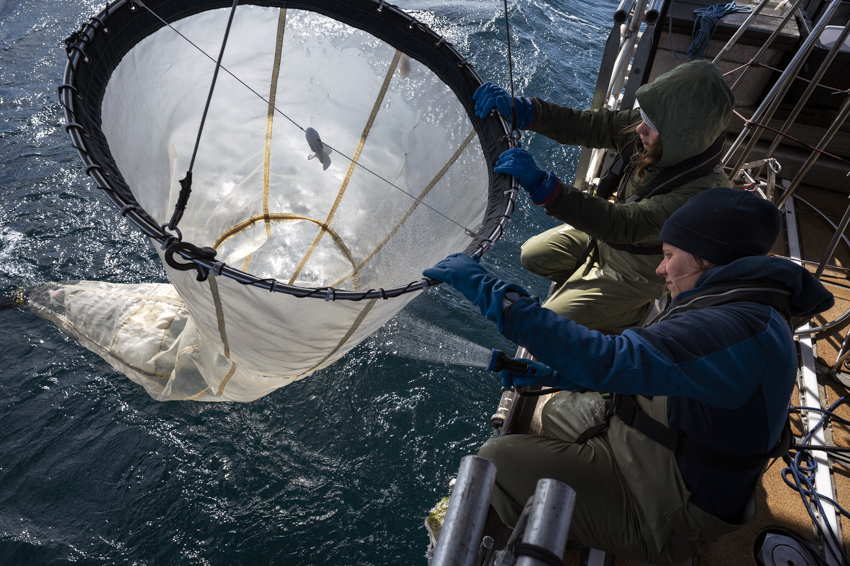
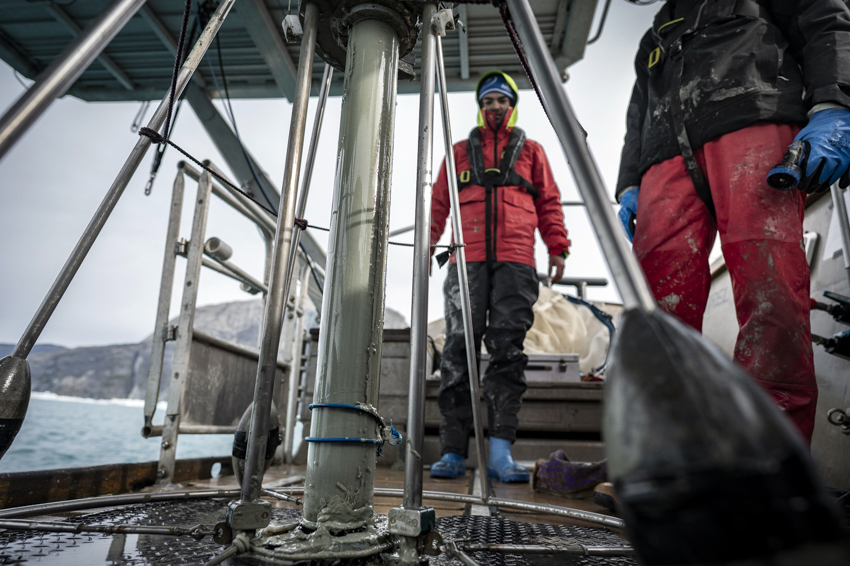



During the expedition, scientists worked across 5 fjords between Kangerlussuaq and Narsaq, collecting:
- 25 sediment cores
- 430 km of sub-bottom profiler data
- 40 zooplankton community samples
- 150 eDNA water samples
- Atmospheric aerosol samples to investigate the biological and chemical composition of Arctic air
Together, these datasets will provide new insights into sediment transport, carbon cycling, marine biodiversity and atmospheric processes, helping scientists better understand how climate change is reshaping Greenland’s coastal ecosystems.
These achievements would not have been possible without the exceptional commitment and flexibility of the Forel crew. Their close collaboration with the scientific teams, adaptability to changing conditions, and willingness to support complex operations were essential to the success of the mission. From navigating iceberg-filled fjords to enabling sampling in remote and challenging environments, the crew played a key role in making this ambitious research possible.
With fieldwork now complete, scientists will begin analyzing this collection of samples and data to better understand the future of Greenland’s fjords and their role in the global climate system.
The 2026 campaign is not over for the Forel, full steam towards the east coast of Greenland.