


From 20 August to 11 September 2026, FOREL is continuing its mission along the east coast of Greenland, between Ittoqqortoormiit and Narsaq.
This leg marks the return leg of the 2026 mission. Sailing south along Greenland’s east coast, FOREL is making its way towards Narsaq, its final port of call, during several weeks of navigation and scientific research.
Comparing Greenland’s two coasts
The scientific programmes carried out during this leg build on research conducted in 2025 along Greenland’s west coast.
By deploying the same research programmes on the east coast in 2026, scientists can compare data collected in these two regions and investigate the influence of different ocean currents on fjord environments.
This comparative approach makes it possible to explore the specific characteristics of these different environments and to better understand the circulation and fate of particles, contaminants and organic matter within Arctic ecosystems.
Micro- and nanoparticles: characterising contaminants in fjords
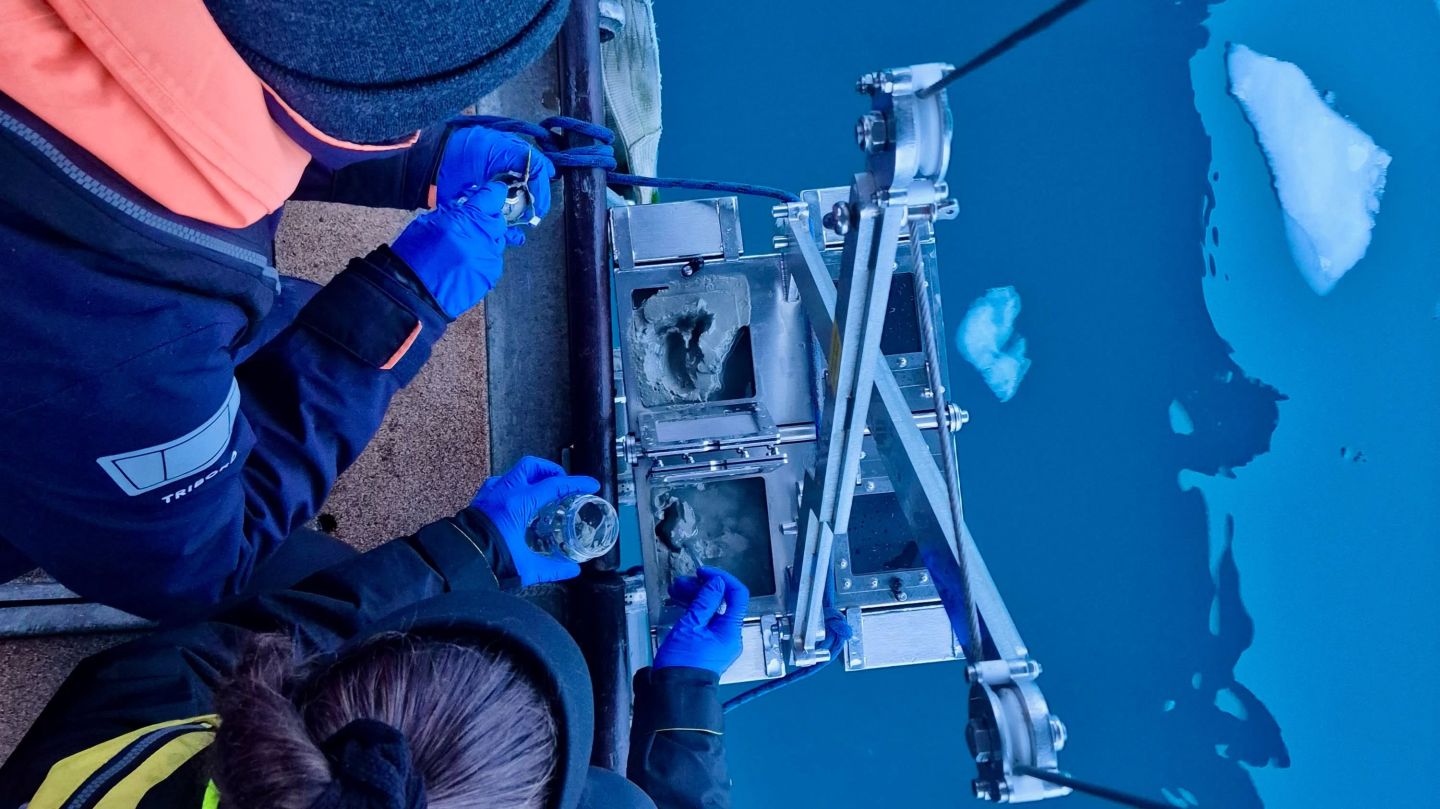
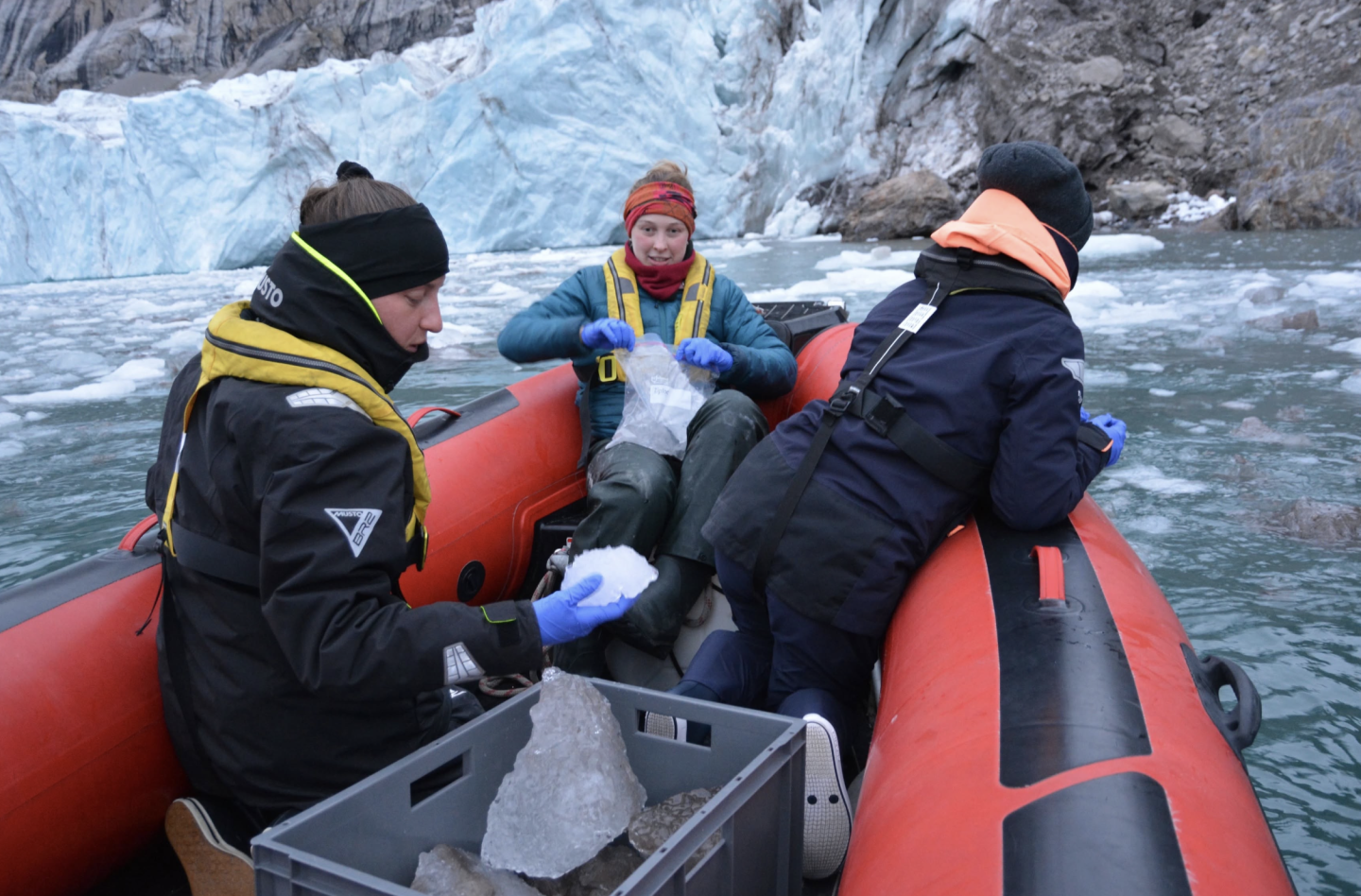
One of the research programmes focuses on the characterisation of naturally occurring and anthropogenic micro- and nanoparticles in fjords.
The teams are collecting samples from different environments to document the presence and characteristics of these particles. This work contributes to a better understanding of the distribution and fate of contaminants in Arctic ecosystems undergoing profound environmental changes.
The role of the microbial loop
The second research programme focuses on the role of the microbial loop in the export of organic matter to fjord sediments.
Microorganisms play an essential role in the transformation and cycling of organic matter within aquatic ecosystems. Scientists are seeking to better understand their contribution to the processes that transport this organic matter towards fjord sediments.
The sampling carried out aboard FOREL therefore makes it possible to study these processes directly in the field, across different fjords along Greenland’s east coast.
Sampling throughout the journey
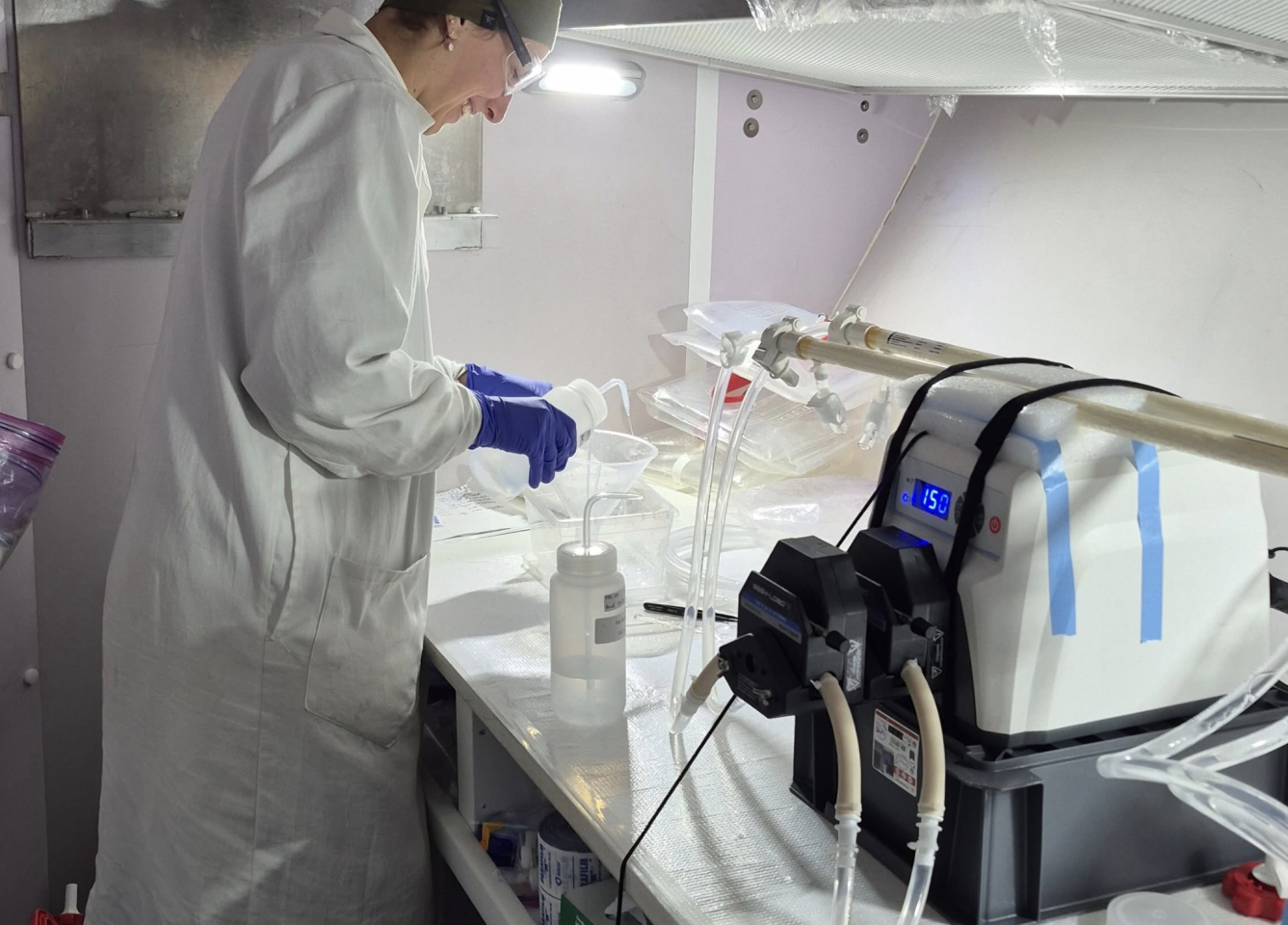
The research is not limited to the study areas. Water samples are also collected throughout the transit legs to measure different contaminants and chemical elements.
These samples, collected along the route, complement the work carried out in the fjords and contribute to building a dataset covering a significant part of FOREL’s journey.
A final leg combining science and navigation
As during the previous legs, life aboard FOREL alternates between navigation, sampling, observation and scientific work. Each day provides an opportunity to further document the environments encountered and contribute to a better understanding of the Arctic.
With this third leg, FOREL is bringing its 2026 scientific mission to a close while pursuing one essential objective: observing, understanding and documenting the transformations taking place in the Arctic environment, as close to the field as possible.
Photos: Stéphane Aebischer, Juliette Le Hec and Indiana Bruzac